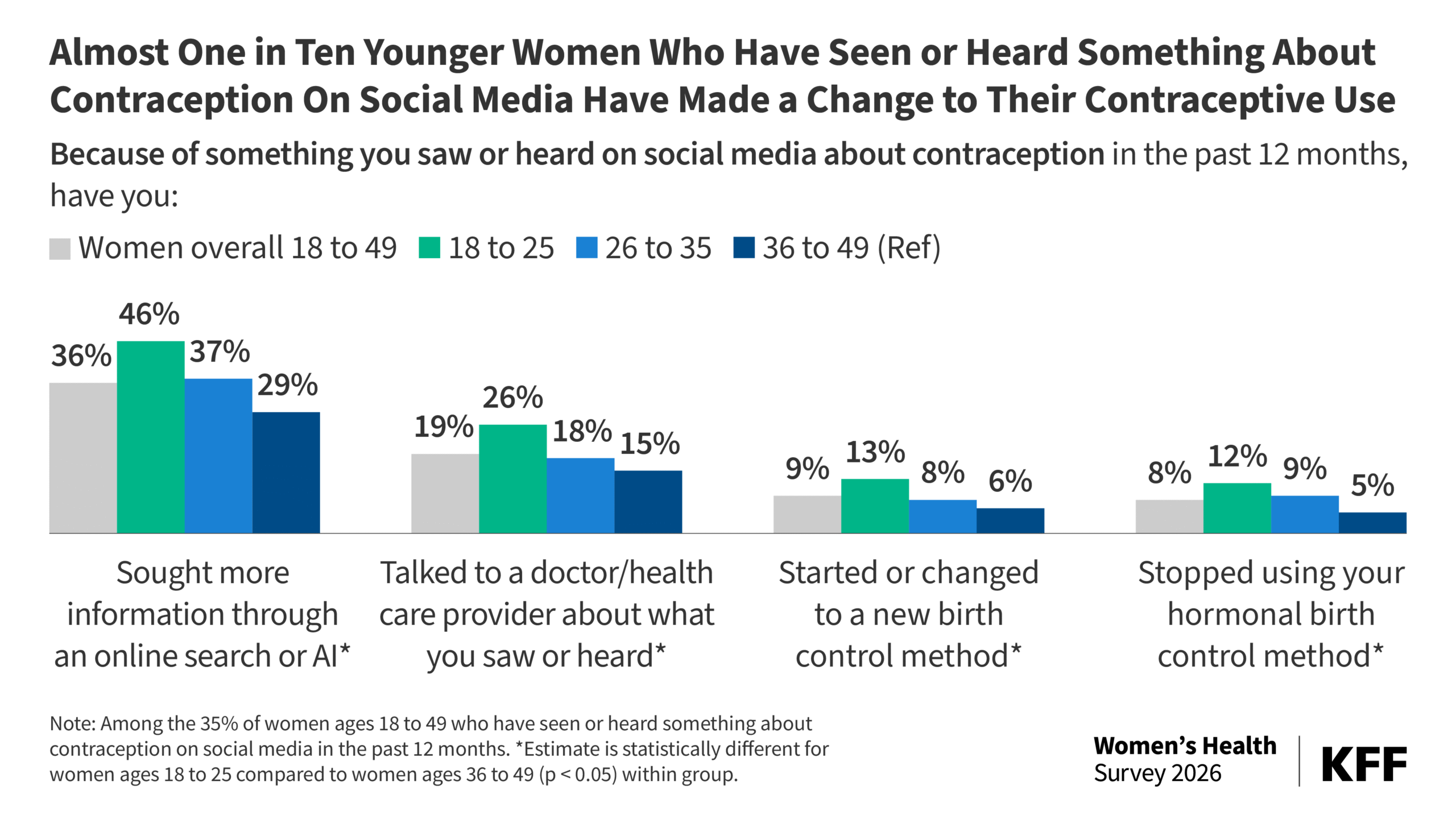
Women’s Experiences Accessing Health Information Online: Trusted Sources and Contraceptive Information
Accessing Health Information The majority of reproductive age women (87%) and men (86%) have looked for health information or advice online either through an internet search...

State Choices, Unequal Access: Policies Shaping Reproductive Health Care Across the United States
Authored by KFF’s Alina Salganicoff, Ivette Gomez, and Usha Ranji, this article for The Milbank Quarterly examines how state policies...
Out-of-Pocket Costs for Long-Acting Reversible Contraception Among Individuals Enrolled in Employer Sponsored Insurance Plans
Despite the Affordable Care Act (ACA) requiring contraceptives to be covered without cost-sharing, many privately insured long-acting reversible contraceptives (LARC)...
Oral Contraceptive Pills: Access and Availability
The 2022 KFF Women’s Health Survey found that one-third (33%) of female hormonal contraceptive users have missed taking their birth...
Fertility Awareness-Based Methods to Prevent Pregnancy
Introduction When used as contraception, fertility awareness-based methods (FABMs) rely on the ability to track ovulation to prevent pregnancy. FABM...