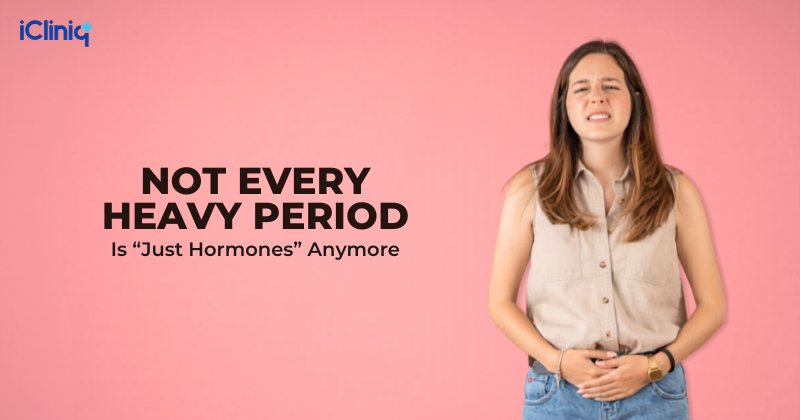
Most women believe irregular or heavy periods are “just hormonal”; however, they may be a sign of an underlying medical condition that requires treatment. The range of potential causes is greater than many women think – PCOS, fibroids, early uterine changes, as well as stress. Knowing what constitutes abnormal bleeding can help you identify problems sooner so that you do not develop chronic complications such as anemia or infertility.
When “Irregular Periods” Are No Longer Normal
Most women blame stress or hormones when their cycle goes off track, and sometimes that’s fair. But doctors are now saying that bleeding lasting longer than seven days, regular large clots, or a cycle that suddenly changes without explanation deserves a proper check. Even light spotting between periods is being taken more seriously than it used to be. Your period doesn’t have to be debilitating to be worth mentioning to your doctor.
Heavy Bleeding Can Quietly Drain Your Iron Without You Realising
Feeling tired all the time, struggling to concentrate, or getting breathless climbing stairs, most women blame a busy life, not their periods. But heavy or prolonged bleeding slowly depletes iron levels, and the symptoms creep up so gradually that the connection gets missed for months. Recent studies show that even moderately heavy periods can affect sleep quality, mental focus, and daily energy levels over time. If you’ve been exhausted for no obvious reason, your cycle might be the place to start looking.
It’s Not Always Fibroids: The Causes Are Broader Than Most People Think
Abnormal bleeding is increasingly being linked to PCOS, thyroid issues, rapid weight changes, chronic stress, and long-term inflammation, not just structural problems like fibroids. In younger women, skipped ovulation cycles are now one of the most common reasons bleeding becomes unpredictable. In women over 40, doctors are being more proactive about checking for endometrial thickening early rather than waiting for symptoms to worsen. The point is that the cause matters because treatment depends entirely on finding the right one.
Better Scans and Tests Are Catching Problems Much Earlier Now
Gynaecologists are moving away from the old “wait and watch” approach and leaning more on detailed pelvic ultrasounds and targeted hormone panels to get answers faster. Many clinics are now using in-office hysteroscopy, an earlier a quick procedure that lets doctors look directly inside the uterine lining without major surgery. This is helping catch polyps, early precancerous changes, and hidden growths before they become bigger problems. Earlier investigation means earlier answers, and that’s genuinely changing outcomes for a lot of women.
Treatment Is Getting More Personalised. Surgery Isn’t Always the Answer
One size no longer fits all when it comes to treating abnormal uterine bleeding. Doctors now factor in your age, whether you want to have children, your hormone levels, and the actual root cause before deciding on anything. For many women, a hormonal IUD or a short course of hormone tablets is enough to bring things back to normal. For others, a minimally invasive procedure works better than traditional surgery, with less recovery time and the same results.
There may be some types of abnormal uterine bleeding that are harmless; however, when blood loss patterns change suddenly or become excessive, they should never be overlooked. New diagnostic technology and personalized therapies are helping physicians identify abnormal uterine bleeding sooner and treat the symptoms better than before. Monitoring your cycle length and bleeding pattern is not being paranoid; it is an essential component of staying healthy.
Publisher: Source link