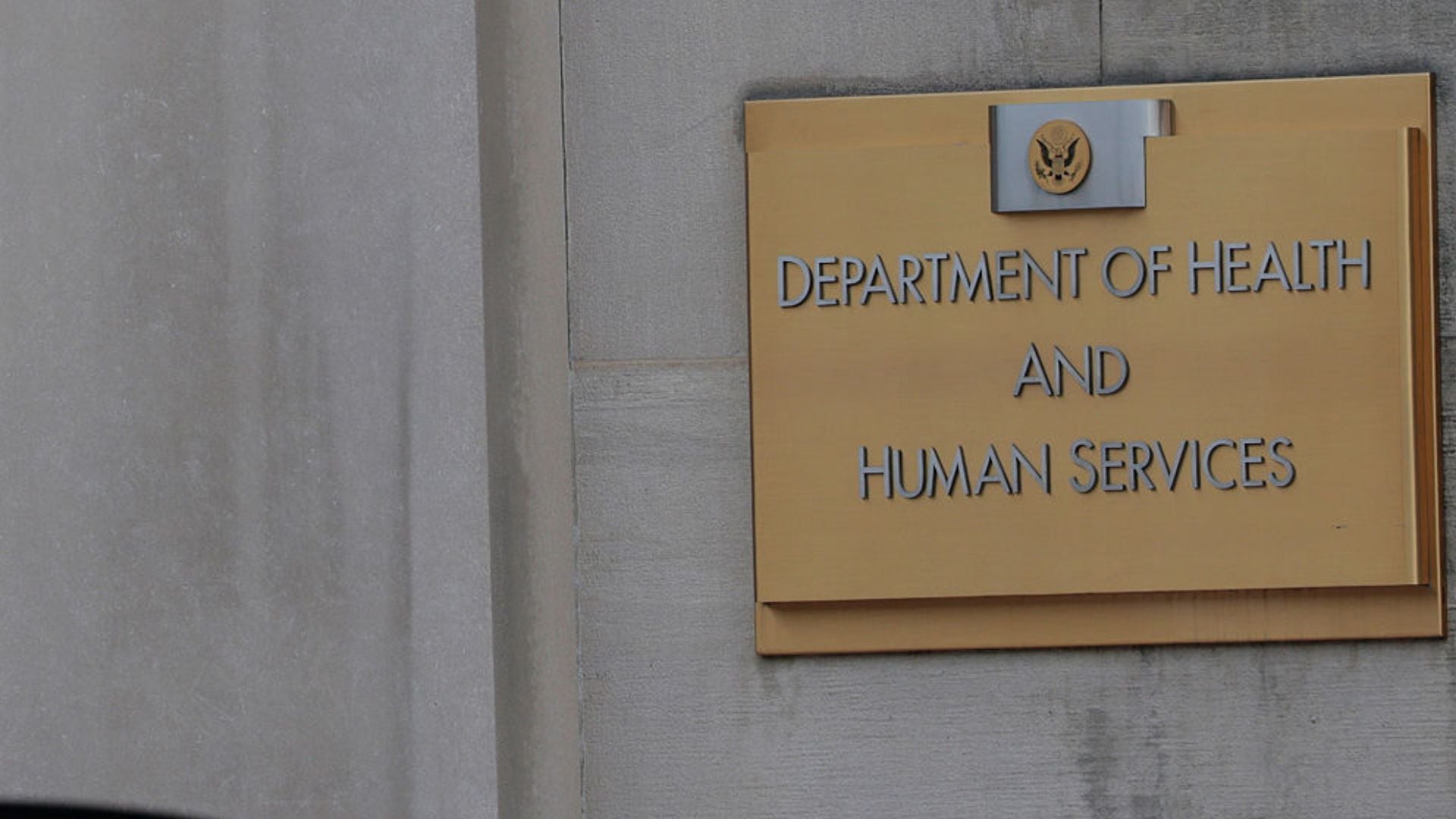
The White House is asking Congress for a $15.8 billion fiscal year 2027 discretionary budget cut for the Department of Health and Human Services, reflecting numerous program eliminations and other efficiencies it said will result from reorganizing subagencies.
Friday’s requested $111.1 billion would be a 12.5% decrease from what Congress ultimately approved for the ongoing federal fiscal year.
It’s also a hedge from the sweeping $33.3 billion discretionary budget reduction (-26.2%) the Trump administration had floated last year, which lawmakers largely rebuffed to keep HHS’ discretionary funding at $125.8 billion for FY2026, generally in line with the prior year.
The White House, in its budget request, reiterated its Make America Healthy Again (MAHA) vision for the federal government, with priorities related to food safety and nutrition as well as modernizing regulatory capabilities by supporting artificial intelligence. Buttressing many of the request’s reductions and eliminations were references to ideological policies from which the administration has taken a sharp turn—namely, health equity, gender identity, reproductive and sexual health support and international health or research programs.
At the forefront was the White House’s plan to bring several subagencies—generally housed within the Centers for Disease Control and Prevention (CDC), the Health Resources and Services Administration (HRSA) and the Substance Abuse and Mental Health Services Administration (SAMHSA)—under a new body called the Administration for a Healthy America (AHA).
Such a reorganization was similarly outlined last year by Secretary Robert F. Kennedy and the administration amid waves of program cutbacks and headcount reductions (around 18,000 fewer people across HHS, according to federal data). Despite these, Congress did not grant the request to fund the AHA for FY2026.
This time around, the White House said executing on the AHA would bring about $5 billion of savings by consolidating or eliminating subagency programs that “duplicate other Federal spending, promote radicalized [diversity, equity and inclusion (DEI)] ideologies or use taxpayer funds to support radical nonprofits that are not aligned with Administration policies.” Such initiatives outlined in the budget request include funding for a webinar on implementing climate change into healthcare, youth-targeted LGBTQ services and the Teen Pregnancy Prevention program, which the proposal said: “issues grants to problematic organizations like abortion clinics that waste American taxpayer dollars on abortion services and promote radical leftist ideology.”
The other major contributor to the White House’s proposed funding cuts for HHS is a $5 billion reduction from FY2026 for the National Institutes of Health (NIH), which the administration said “broke the trust of the American people with wasteful spending, misleading information, risky research, and the promotion of dangerous ideologies that undermine public health.”
Here, it pointed to plans to eliminate three components of the NIH—the National Institute on Minority Health and Health Disparities, the Fogarty International Center and the National Center for Complementary and Integrative Health. The request was light on details about specific changes to grant funding levels, but placed a target on programs the White House said sent funds to training nurses on gender-related patient care and the controversial Wuhan Institute of Virology.
Despite Congress’ rejection of its prior proposed cuts to NIH, the administration was active in terminating or freezing thousands of the agency’s grants where it could.
Other items in the budget ask include a $129 million reduction in funds for the Agency for Healthcare Research and Quality, a $356 million cut to the Administration for Strategic Preparedness and Response, a $768 million reduction for the refugee resettlement program, an $819 million cut to the Unaccompanied Alien Children program, fully eliminating the Community Services Block Grant to trim $775 million and an end to the Low Income Home Energy Assistance Program expected to save the federal government $4 billion.
At a topline level, the executive branch’s budget request includes a $445 billion, or 42%, increase in military spending, bringing it to $1.5 trillion, and a reduction in nondefense discretionary spending by $73 billion, or 10%, to $660 billion.
Publisher: Source link