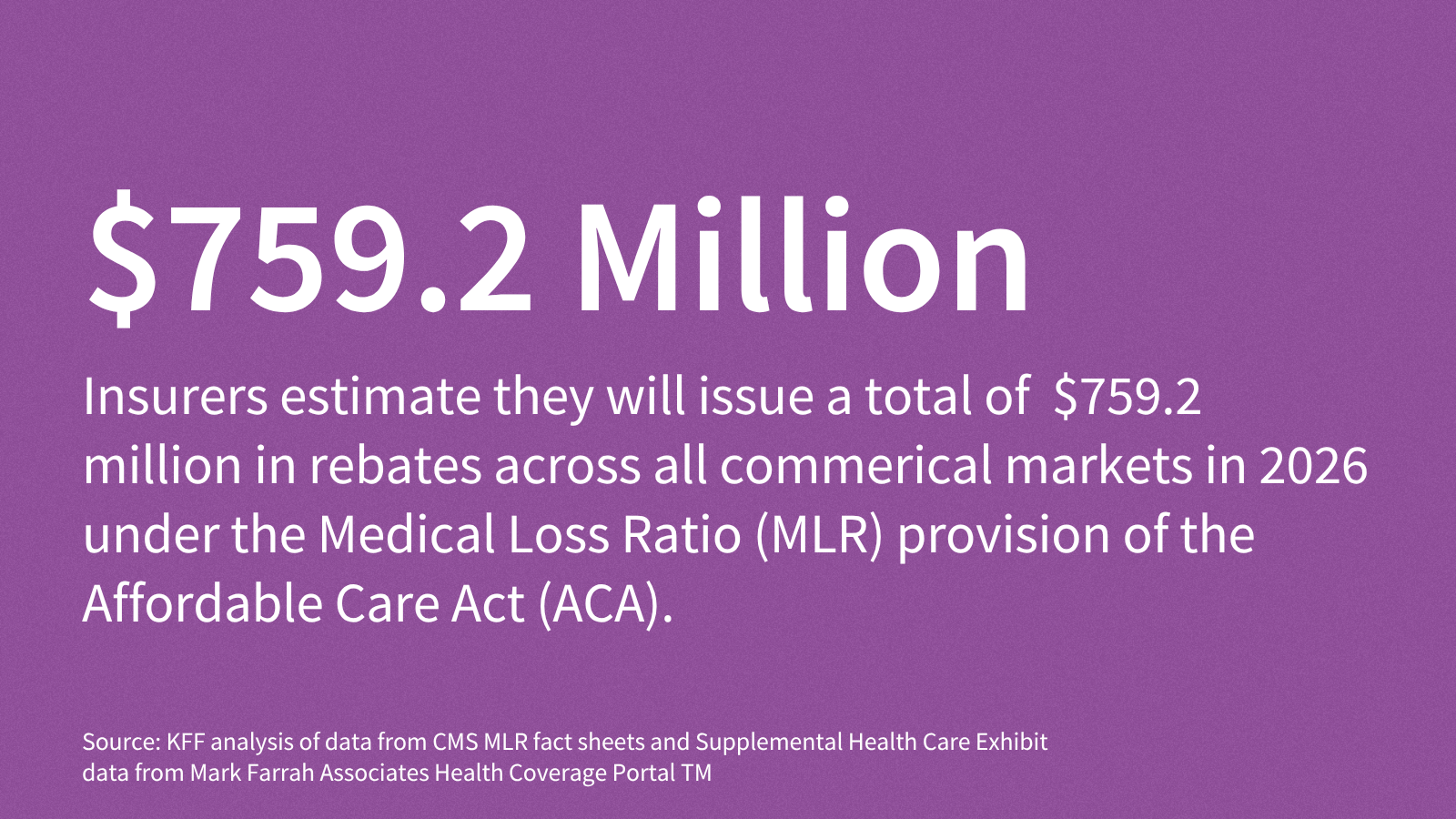
2026 Medical Loss Ratio Rebates
The Medical Loss Ratio (MLR) provision of the Affordable Care Act (ACA) limits the share of premium income that insurers...
What Are the Recent Trends in Employer-Based Health Coverage?
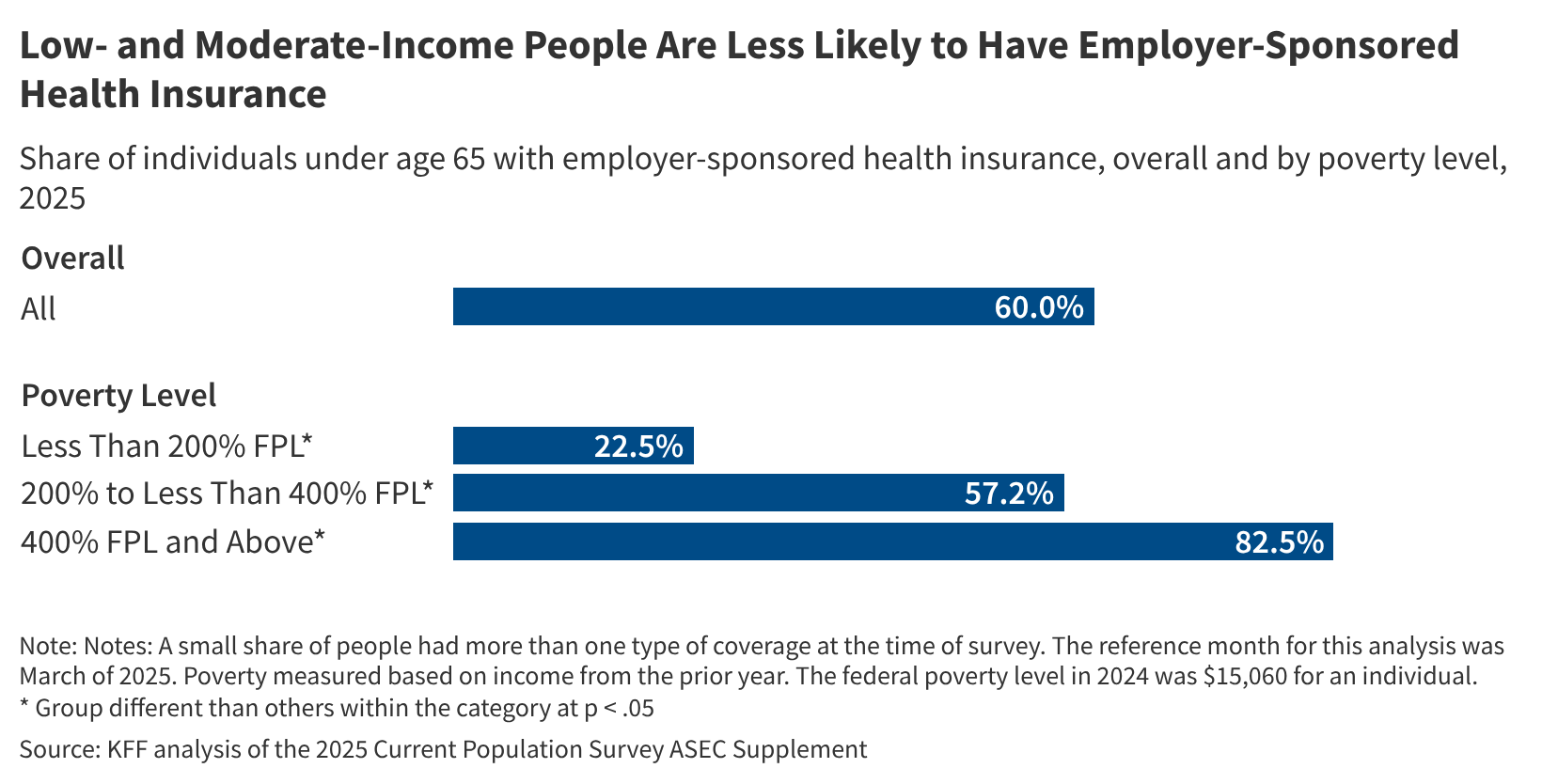
Employer-sponsored health insurance is the largest source of health coverage for people under 65, covering 165.6 million people in March...
Employer-Sponsored Health Insurance 101 | KFF
Workers contribute to health insurance in two ways. First, through a premium contribution, which is typically deducted from an employee’s...
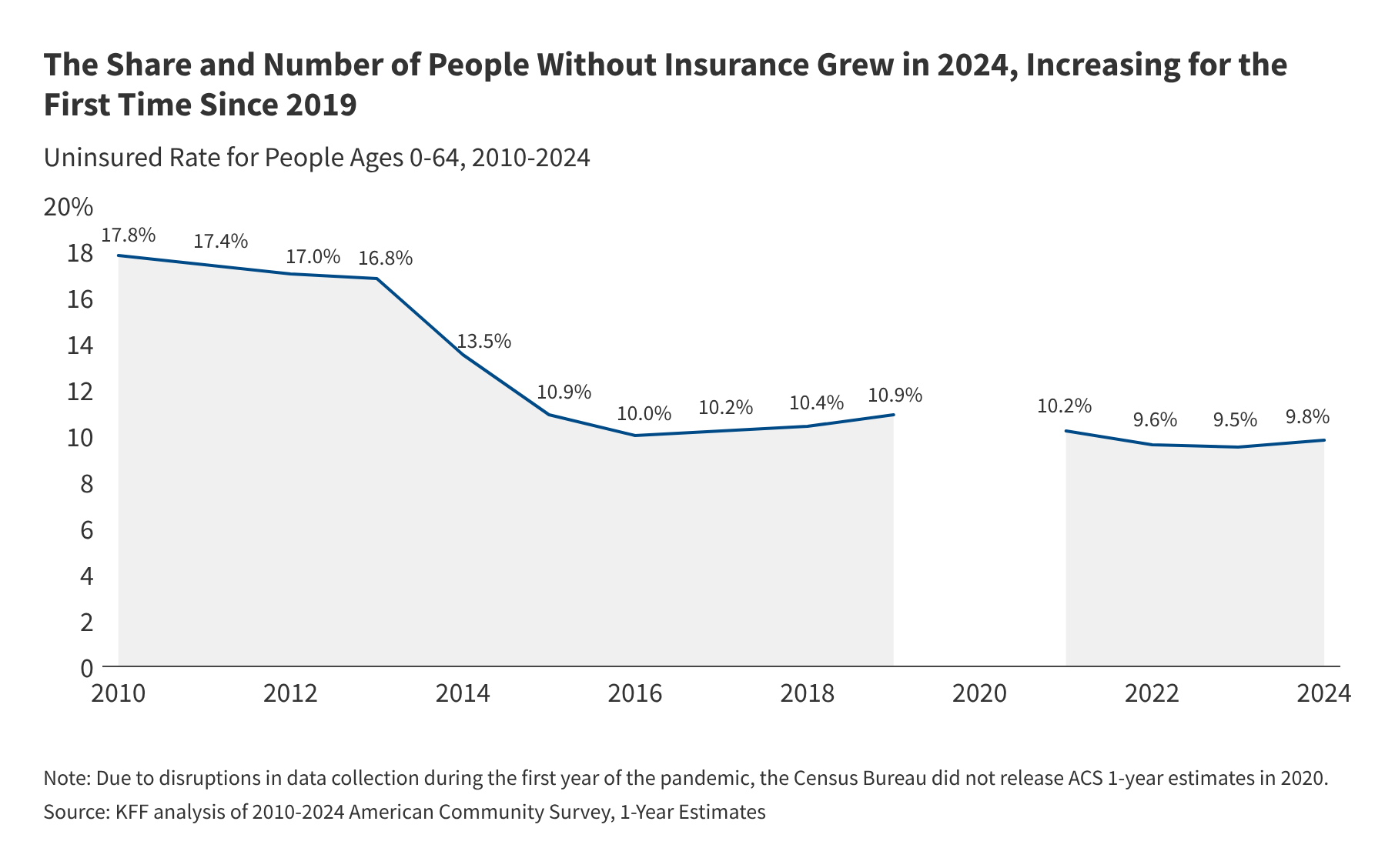
Key Facts about the Uninsured Population
How many people are uninsured? For the first time since 2019, the number of people without health coverage and the...
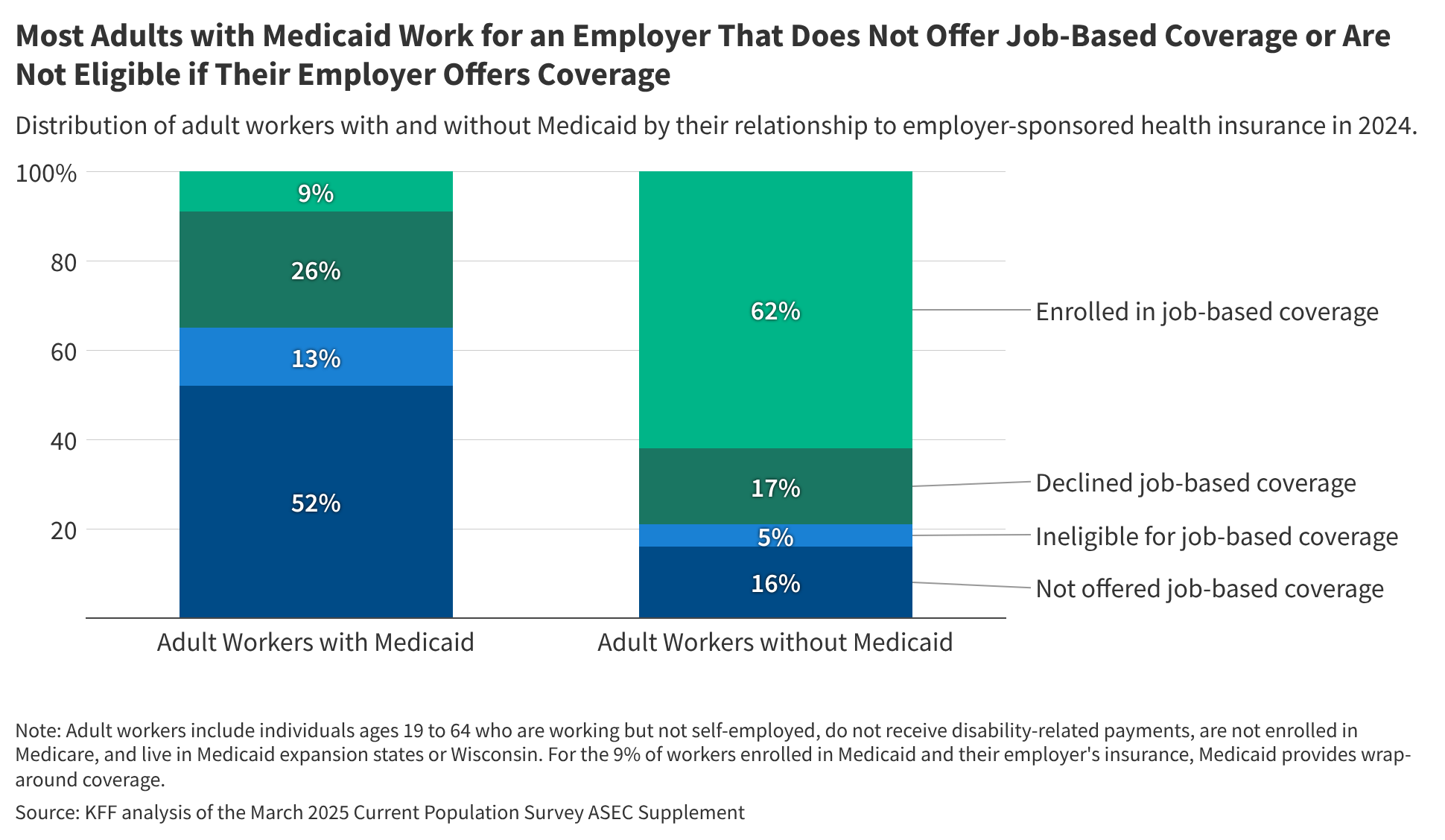
Medicaid Workers and Job-Based Insurance: Who Is Offered, Eligible, and Enrolled?
Passage of the 2025 reconciliation law, also known as the “One Big, Beautiful Bill,” in July 2025 and the inclusion...

How Unaffordable is Health Care?
In his latest JAMA Forum column, KFF’s Larry Levitt explores how unaffordable health care is in the U.S. in the...
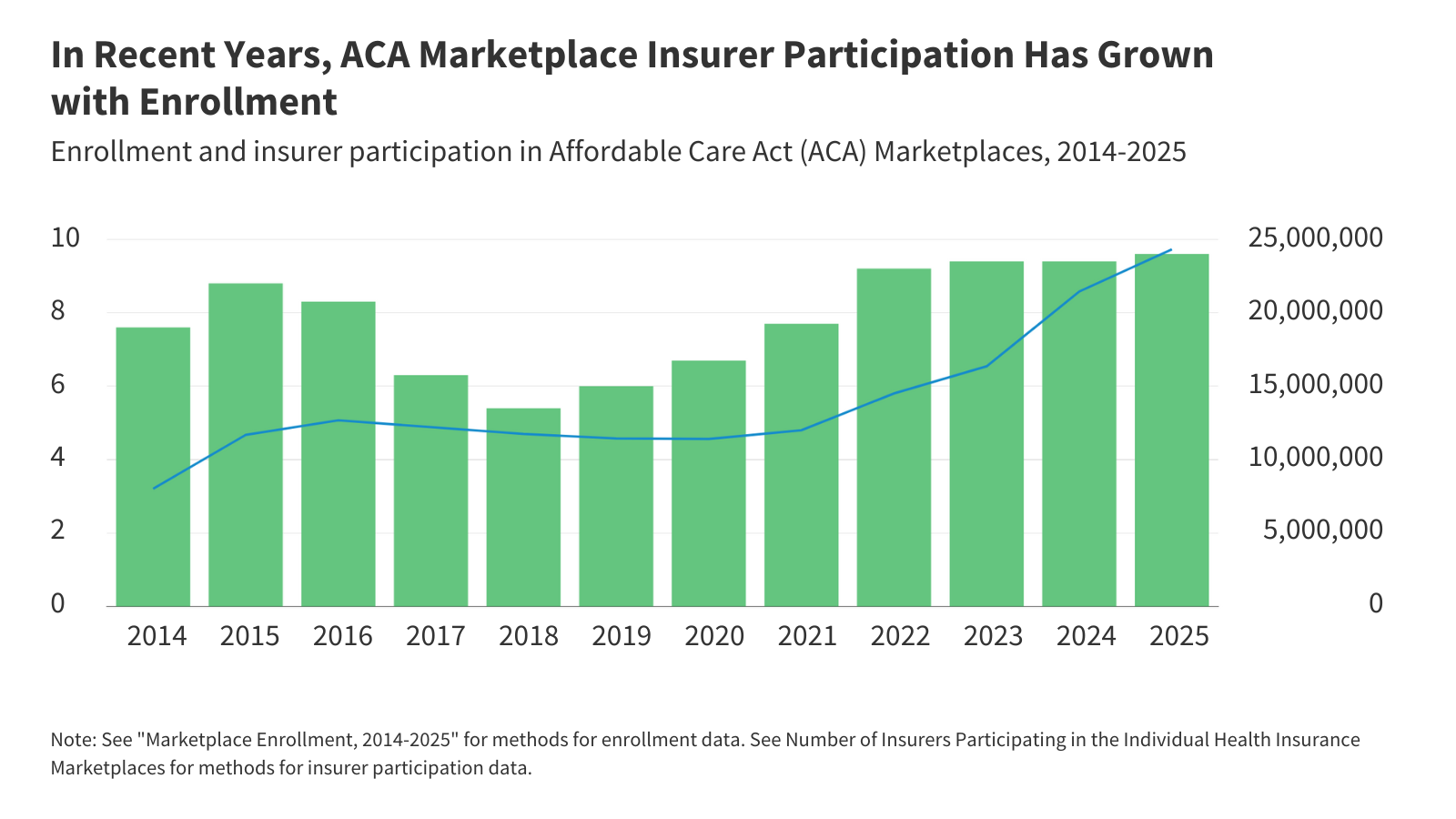
Recent Trends in Commercial Health Insurance Market Concentration
Commercial health insurance markets remain highly concentrated across coverage types. However, the individual market, which consists mostly of the ACA...
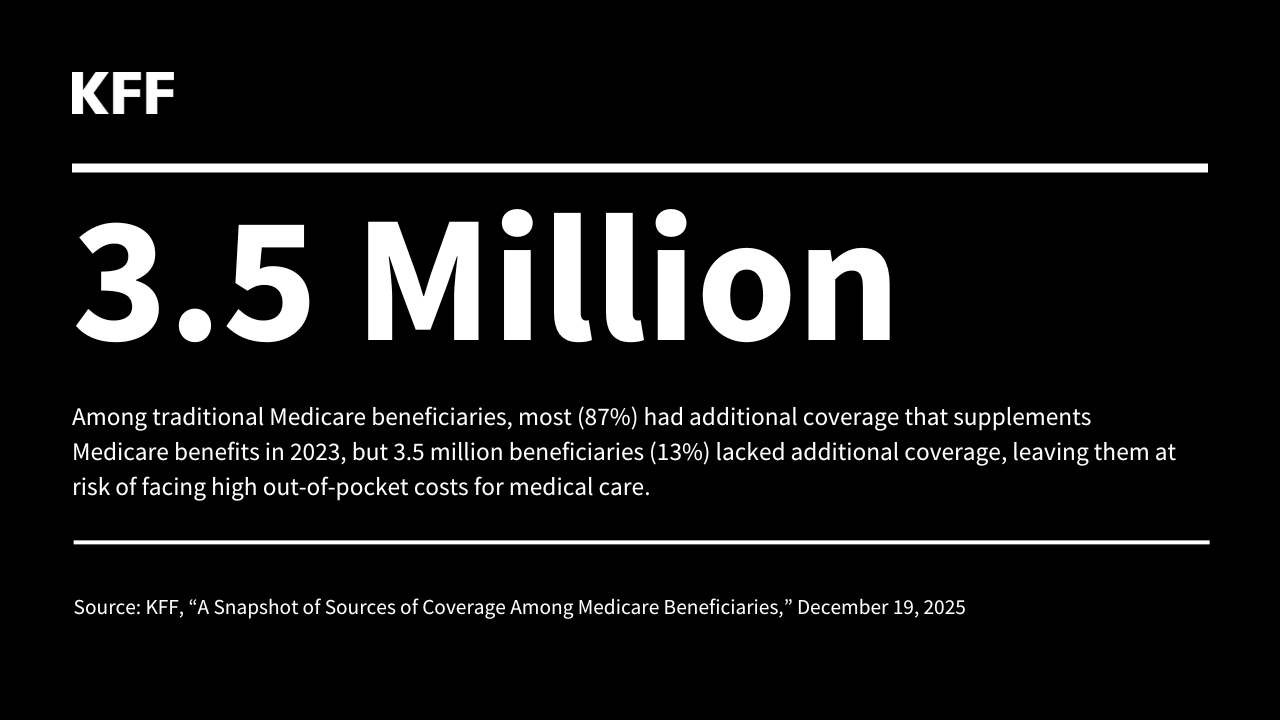
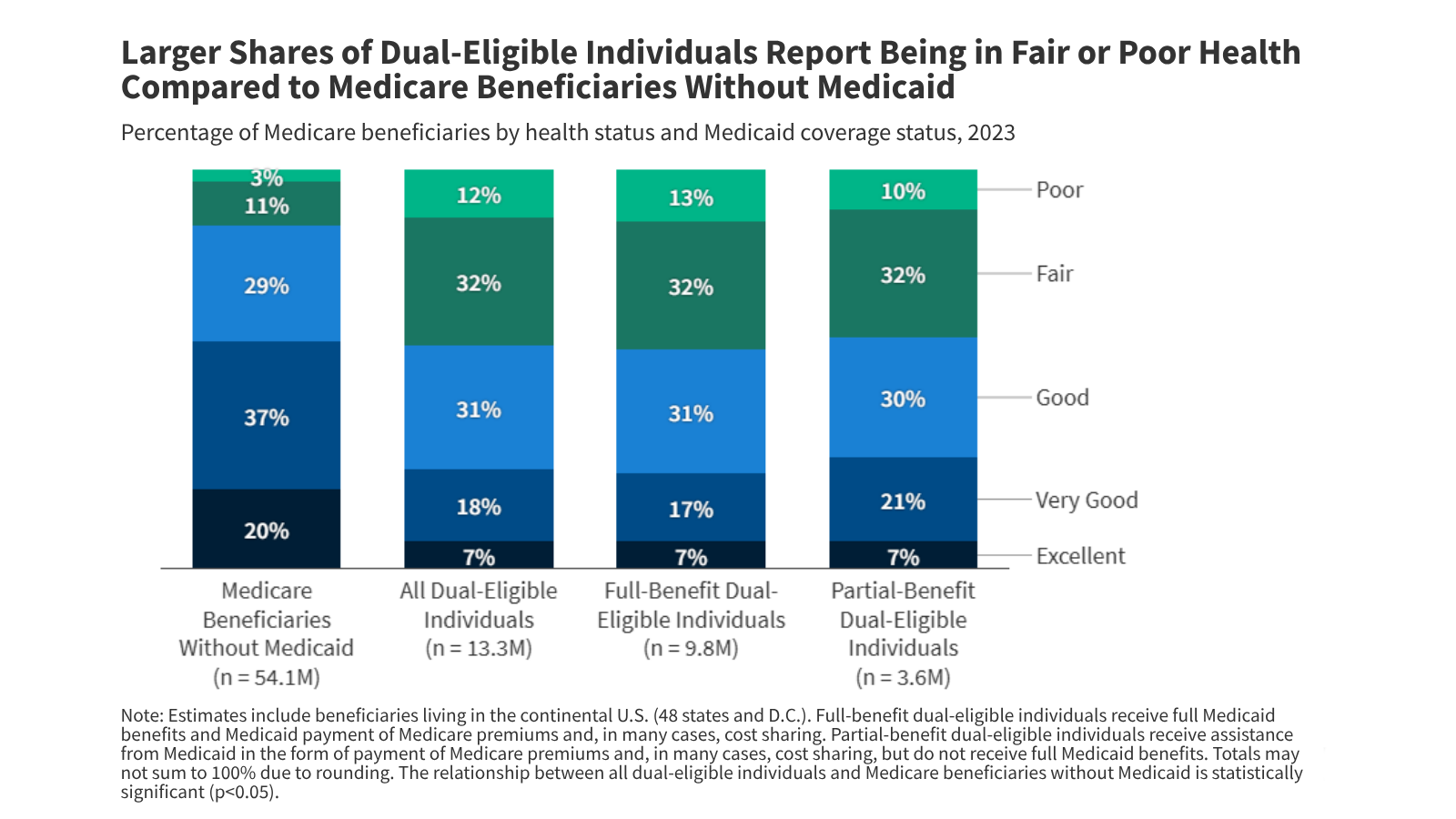
A Snapshot of Sources of Coverage Among Medicare Beneficiaries
Health care affordability has been a longstanding concern in the U.S., including among older adults, many of whom have relatively...
How ACA Marketplace Costs Compare to Employer-Sponsored Health Insurance
This analysis compares ACA Marketplace costs to employer-sponsored health insurance costs and finds that individual market premiums have become more...
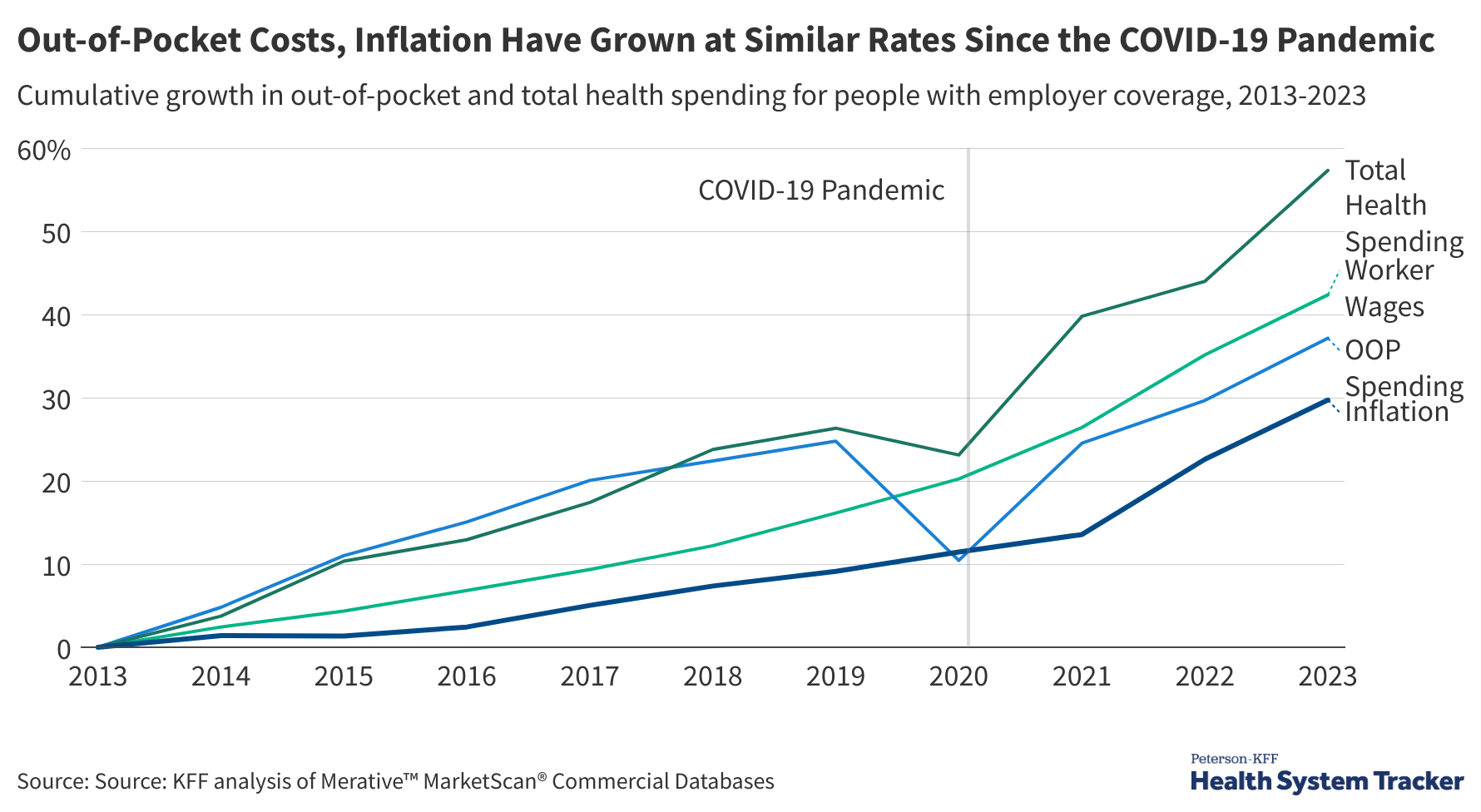
How Much do People with Employer Plans Spend Out-of-Pocket on Cost-Sharing?
Over the past decade, cost-sharing (the out-of-pocket portion of household health spending) has grown faster than both workers’ wages and...