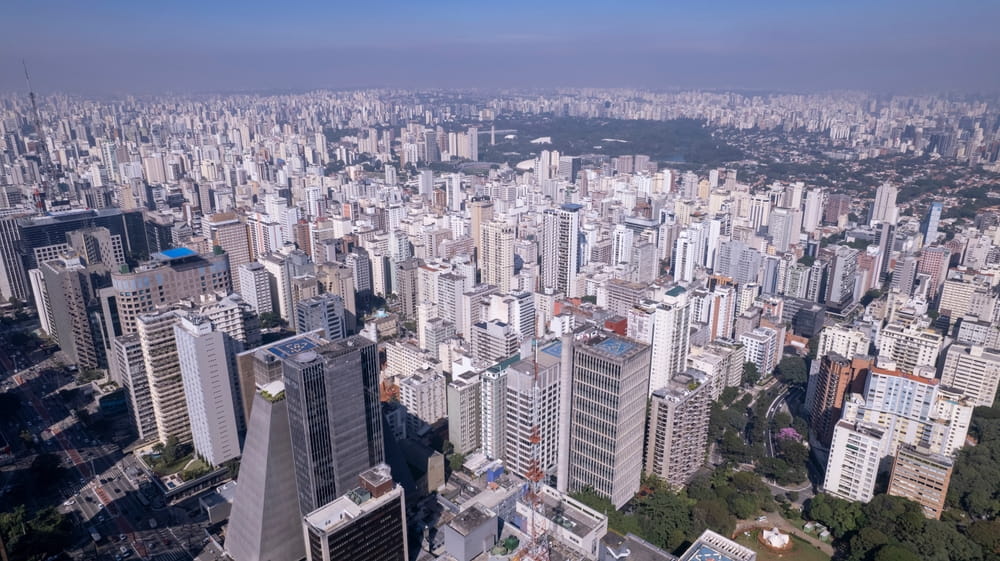
Latin America is opening up in several places at once, and that is the opportunity. Across the region the political pendulum is swinging right, from Argentina to Chile to Colombia, and that shift is landing, on balance, in a direction friendlier to business and foreign investment. Six of the region’s largest markets are each moving through a real shift right now: a credible reform program in Argentina, a resilient growth story in Brazil, a stable, business-friendly government in Chile, a market-friendly transition in Colombia, a still-strong nearshoring case in Mexico, and a historic reopening in Venezuela.
This is not one regional bet. Each market offers a distinct, time-sensitive route to value, with its own catalysts, its own sectors, and its own execution risks. The catalysts create specific reasons to act now. For most investors and companies, the positive developments now underway are a reason to begin preparing, running diligence, and building relationships, not a reason to stay on the sidelines. What follows is a market-by-market read on what has changed, where the opportunity sits, and what it takes to capture it.
Across the Six: The region is open for business, with a few things worth checking first
- Washington’s influence in setting terms cuts differently market by market: sanctions relief in Venezuela, tariff clarity in Brazil, and the USMCA review in Mexico are all being shaped by U.S. decisions made in the last six months, and Colombia’s incoming government is moving to align itself with Washington after four years of friction under Petro. That keeps the U.S. relationship, not domestic politics, the variable investors most need to track in each of those four markets. Chile is largely insulated from all of it.
- Election calendars are creating natural entry points: Colombia’s transition, Brazil’s presidential election, Chile’s new government, and Argentina’s reform push are all happening at once. Each is also a moment when good information and the right guidance beat waiting on the sidelines for full certainty.
- Capital agrees the region is worth it: Latin America M&A capital deployed rose sharply through April 2026 even as deal count fell. Investors are still here. They’re just more selective, and they reward the deals, and the advisors, that get the fundamentals right.
Argentina: A credible reform program heads into its next big test
What happened
- Political swing: Milei’s La Libertad Avanza won the October 2025 midterms by a wide margin, which strengthened his hand in Congress. Since then his approval has dropped to its lowest point in more than two years, and what that means for the 2027 presidential election is now part of every investor conversation.
- Legislative push: The government wants to eliminate the primary elections and reform the Central Bank before the 2027 cycle. Most read this as an attempt to fragment the Peronist opposition and lock in a friendlier path to re-election.
- Economy: Inflation is trending down (core inflation hit 2.3% in April) but still a real risk, with roughly $19 billion to $20 billion in dollar-debt maturities due in 2026. Bond markets are already pricing in election risk: sovereign bonds maturing just after the 2027 vote yield about 354 basis points more than ones maturing a year earlier.
Why it matters
- Argentina is in the middle of one of the more credible reform stories in the region right now, with falling inflation, a shrinking deficit, and a government building its reserve position. That is the kind of turnaround institutional investors have been waiting years to see confirmed.
- Watch the primary elections and Central Bank fights over the next two quarters. They will show how much staying power the reform program has. Clients with Argentine exposure should use this window to get positioned, watching the 2027 calendar closely, rather than holding out for a certainty that only arrives once the moment has passed.
Where the opportunity is
- Sectors and investors: Oil and gas, led by Vaca Muerta; lithium and copper mining; infrastructure; privatizations; financial services; technology; and sovereign and special-situations credit. The natural buyers are energy and mining strategics, infrastructure funds, emerging-market credit and special-situations investors, and institutional investors returning to Argentina. The recurring theme: build a position gradually now, before the market settles and competition drives prices up.
- What it takes: Policy and election scenario analysis; capital-markets and investor positioning; governance readiness for companies seeking international capital; stakeholder and community strategy; transaction communications; reputation management; and contingency planning for currency, political, or market volatility.
Brazil: New U.S. tariffs land three months before an election
What happened
- Tariffs: A 25% U.S. tariff on most Brazilian goods took effect July 22 under a Section 301 action, the result of a year-long investigation into Brazil’s digital-trade rules, treatment of U.S. tech platforms, and deforestation enforcement. Oil and gas, beef, coffee, and oranges are exempt. This replaces an earlier 50% threat that had been tied explicitly to former President Bolsonaro’s trial.
- Election: Lula is running for a fourth term at 80, against Senator Flávio Bolsonaro (Jair Bolsonaro can’t run after his 2025 conviction). The first round is October 4. Polling has tightened all year, and several analysts think the new tariffs help Lula politically.
- Monetary backdrop: The Selic rate, Brazil’s benchmark interest rate, sits at 15%, the highest since 2006, as the central bank fights inflation that’s running above target heading into an election year of fiscal spending.
Why it matters
- Brazil remains Latin America’s largest and most liquid market. The economic fundamentals, low unemployment, rising real wages, a resilient agriculture and mining sector, are intact even with the new tariff. For investors playing the long game, a contested election year is often exactly when the best entry pricing shows up.
- The tariff is real and worth mapping against the exemption list, but it is manageable given the broad carve outs for major categories like oil and gas, beef, coffee, and oranges. Clients with U.S. Brazil trade flows should get that mapping done now so they can move through October with confidence rather than uncertainty.
Where the opportunity is
- Sectors and investors: Domestically oriented consumer and financial businesses, infrastructure, mining, agriculture, energy, and technology, along with the export categories that sit inside the tariff carve-outs. Political and trade uncertainty is also opening valuation dislocations that favor strategic acquirers and private-equity buyers with a longer horizon.
- What it takes: Tariff and supply-chain exposure mapping; election scenario planning; government and stakeholder communications; transaction positioning; investor relations through the volatility; corporate-reputation management; and crisis preparedness.
Chile: The region’s steadiest market gets its most right-wing government since 1990
What happened
- Election: José Antonio Kast, of the hard-right Republican Party, won the December 14, 2025 runoff with 58% of the vote against Jeannette Jara of the governing left coalition. It’s the most right-wing government since Chile returned to democracy. He took office March 11, running on a platform of cutting crime and irregular migration and reviving growth.
- Fiscal agenda: Kast has proposed roughly $6 billion in spending cuts, though the details are still thin. The fiscal deficit was already narrowing before the change of government, helped by large investment projects and better credit conditions.
- Trade and commodity exposure: Chile has mostly avoided the tariff wave hitting Brazil and Mexico. The bigger swing factor for growth here is global copper demand, given how central copper is to the export base.
Why it matters
- Chile now combines the region’s steadiest macro profile with a newly business-friendly government, a rare pairing anywhere in Latin America at the moment. It makes a strong, lower-volatility base for regional operations, treasury, or a listing.
- The spending-cut plan is still light on specifics, which is a normal new-government item to track rather than a reason to hold back. Clients with Chilean public-sector counterparties or concession contracts should watch for detail over the next two quarters.
Where the opportunity is
- Sectors and investors: Copper and lithium, renewable energy and transmission, infrastructure and concessions, and financial services, plus Chile’s continued appeal as a lower-volatility base for regional operations, treasury, or a listing. Kast’s reform package, including a proposed corporate tax cut and regulatory simplification, sits alongside durable global copper demand to improve project economics. The natural investors are mining companies, infrastructure funds, institutional investors, and strategic operators.
- What it takes: Stakeholder communications; sustainability positioning; investor-narrative development; transaction communications; and reputation or crisis management around environmental and social issues.
Colombia: A new pro-West government arrives with a growth and investment agenda
What happened
- Result: Right-of-center candidate Abelardo de la Espriella defeated Iván Cepeda, the outgoing government’s chosen successor, in the June 21 runoff.
- Dispute, then confirmation: Petro publicly questioned the count. The national electoral authority, the OAS, and EU observer missions all confirmed the result, and the National Electoral Council certified De la Espriella on June 24. He is inaugurated August 7.
- Economic handoff: Petro avoided a recession during his term. GDP growth picked up to 2.6% in 2025 from 1.5% in 2024, but he leaves behind an entrenched fiscal deficit, high public debt, and slowing foreign investment.
- Energy squeeze: Colombia’s firm power supply is already running behind demand, a gap XM, the company that operates Colombia’s power grid and dispatches electricity across the system, projects will widen from 2.3% in 2025 to 2026 to 6.8% by 2029 to 2030, with new generation and transmission consistently arriving late. At the same time, proven gas reserves fell 17% in 2025 to an 18-year low, and the supply gap is expected to approach 20% of demand this year. NOAA and IDEAM are both pointing to a strong El Niño peaking late in 2026, which would hit hydro generation just as gas backup stays tight, and the utility sector is owed roughly COP 5.1 trillion by public entities.
Why it matters
- Colombia is handing off to a business-friendly platform after four years of policy uncertainty. Lower corporate taxes, austerity, and a tougher security posture add up to a real reset for energy, mining, and financial-services investors who sat out the Petro years waiting for exactly this kind of shift.
- The transition still deserves a careful read. Clients with Colombian operations or investors there should get a clear view on policy continuity and rule of law heading into the August 7 inauguration, with a communications plan ready if questions come up. Handled well, this is a well-timed entry point, not a reason to wait.
- The energy gap is a real, multi-year investment opportunity in generation, transmission, and gas supply, not a one-off shortfall, and it lines up with real political tailwind. The incoming government has campaigned on faster licensing, an accelerated generation auction before 2027, and restoring credibility at the regulator, CREG.
- The 2026 to 2027 window is a strong entry point for investors who move early. With El Niño peaking and gas still tight, capacity and supply are exactly what the market will pay up for once conditions improve. Entering now matters, but doing it with a real understanding of the region, the reserve margins, gas contracts, and utility counterparty risk that shape the ground truth, is what separates a good entry from a costly one, and lets investors get ahead of the August 7 policy reset rather than behind it.
Where the opportunity is
- Sectors and investors: Power generation, transmission, and natural-gas and LNG infrastructure sit at the center of the opportunity, alongside mining, transportation, financial services, and security-related infrastructure. The natural investors are infrastructure and energy funds, utilities, strategic operators, and private-equity firms positioning ahead of the August 7 reset.
- What it takes: Transition and policy scenario analysis; government and stakeholder mapping; regulatory communications; investor positioning; corporate-governance readiness; assessment of state-counterparty risk, including utility receivables; and crisis communications tied to energy reliability or security.
Mexico: A multi-year USMCA review, and a government pushing hard on its own investment plan
What happened
- USMCA review: The formal joint review of the USMCA opened around July 1, and it’s shaping up to be a drawn-out, multi-year negotiation rather than a single yes-or-no vote. Mexico has trimmed the U.S. side’s list of demands from 54 items to 14, and raised 13 of its own, mostly around steel, aluminum, and automotive tariffs.
- Tariffs already biting: Existing U.S. tariffs, 50% on steel and aluminum, 25% on non-compliant autos, cut Mexican steel exports to the U.S. by 36.6% in 2025 and pulled auto shipments down 5.1% year-over-year through April 2026. An estimated 350,000 manufacturing jobs are at risk.
- Investment signal: Private forecasters have cut 2026 growth estimates (IMEF at 1.1%, BBVA at 1.2%), and Mexico’s global FDI ranking has slipped to 11th, behind Canada. That’s worth watching, even as the structural case for nearshoring hasn’t gone away.
- Plan México: Sheinbaum’s government is running its own investment push alongside the USMCA process. Plan México now targets close to $323 billion (5.6 trillion pesos) in public and mixed investment through 2030, with energy taking the largest single share, alongside transport, ports, water, and health. In May, the government added fast-track rules that grant automatic approval within 30 to 90 days for projects above roughly $114 million, or for any investment in energy, semiconductors, automotive, textiles, or advanced manufacturing.
Why it matters
- That selectivity favors investors and manufacturers willing to do the work now. Locking in USMCA-compliant supply chains ahead of a firm resolution date is what turns preparation into a real edge instead of a waiting game.
- For cross-border issuers, getting ahead of the rules-of-origin question is the practical next step. It’s exactly the kind of groundwork that positions a company to move first once the review’s outcome becomes clear.
- Investors don’t have to wait on USMCA to find an entry point. The government has been explicit about where it wants capital to land, energy, semiconductors, autos, textiles, and advanced manufacturing, and the streamlined approval process makes those sectors a faster way in than betting on trade-policy timing alone.
Where the opportunity is
- Sectors and investors: Semiconductors, automotive and auto parts, advanced manufacturing, energy, transport, ports, water infrastructure, industrial real estate, and supply-chain services, several of which qualify for Plan México’s fast-track approvals. The natural investors are U.S. manufacturers, infrastructure funds, industrial operators, and nearshoring-focused capital.
- What it takes: Rules-of-origin and supply-chain positioning; cross-border stakeholder strategy; government and regulatory communications; market-entry planning; transaction communications; and an investor narrative that addresses USMCA uncertainty rather than waits it out.
Venezuela: The hemisphere’s biggest reopening story, with real diligence to do first
What happened
- Political shock: U.S. special forces captured Nicolás Maduro in Caracas on January 3, 2026, and flew him to New York to face narco-terrorism charges. Vice President and former oil minister Delcy Rodríguez was sworn in as acting president days later.
- Sanctions and oil: Washington has eased Venezuela sanctions in stages since January. A series of OFAC general licenses now let Chevron, BP, Eni, Shell, Repsol and Maurel & Prom resume or expand oil and gas operations, and diplomatic relations were restored on March 5.
- Investor pitch: Rodríguez has been touring investor conferences in Miami and with Gulf-backed sponsors, pitching a new hydrocarbons law, independent arbitration for disputes, and double-digit GDP growth for 2026 through 2028.
- Debt: The government is reportedly preparing to acknowledge close to $240 billion in debt, well above what markets had assumed. That would make this the largest sovereign restructuring on record. The stated goal is a creditor deal this year; most observers think it slips into 2027.
Why it matters
- This is arguably the single largest reopening opportunity in the hemisphere right now. Major oil majors are already back in, sanctions are easing in stages, and a government that wants foreign capital is actively courting it. For energy, services, and infrastructure investors who have been waiting for a Venezuela entry point, this is when that conversation starts.
- The opportunity comes with real homework attached. The political and legal foundation is still being built, so the right way in is with a current sanctions read, a clear view of counterparty risk, and a communications plan ready before any public step. That groundwork is exactly what the right advisor should be doing alongside a client, not after the fact.
- For debt and special-situations investors, the roughly $240 billion restructuring is a generational deal to get positioned for, not a reason to wait. Q1 oil revenue came in at $5.5 billion, still well below pre-sanctions levels, which is useful context for anyone sizing up the government’s growth claims and timing their entry.
Where the opportunity is
- Sectors and investors: Oil and gas and oilfield services first, then power, ports and logistics, and broader infrastructure reconstruction, with sovereign and distressed debt as a parallel special-situations track. The natural investors are energy companies, infrastructure funds, strategic operators, and special-situations investors, several of the majors already re-engaged under OFAC licenses.
- What it takes: Sanctions and counterparty diligence; government and stakeholder mapping; contract-enforceability analysis with legal advisers; creditor communications; market-entry positioning; human-rights and reputational-risk management; and crisis preparedness before any public step.
The Bottom Line: One region, six clocks, all running now
Latin America is not a single, uniform bet, and that is precisely what makes the current moment compelling. Each of these six markets offers a distinct, time-sensitive route to value, with identifiable catalysts, definable sectors, and execution risks that can be managed through disciplined preparation and informed advice. Venezuela’s staged reopening, Colombia’s energy squeeze and policy reset, Brazil’s tariff-driven dislocations, Mexico’s Plan México fast-track, Argentina’s reform trajectory, and Chile’s stability-plus-reform pairing are not variations on one theme. They are six different clocks, each running now.
The common thread is timing. In most of these markets the catalyst is already visible while the outcome is not yet priced, which is the window in which preparation pays. Investors and companies that begin evaluating markets, assets, partners, and stakeholders now, before policy clarifies and competition intensifies, will be positioned to move when others are still waiting for certainty.
That preparation is where an integrated advisor earns its place. Market entry and transaction positioning, the solid governance platform that investment and IPO readiness depend on, investor engagement and access, government and regulatory communications, stakeholder strategy, sustainability positioning, reputation management, and crisis and special-situations preparedness are not separate exercises in these markets. They move together, and they are most effective when they are planned together. ICR works across all of them, which is what lets a client turn a good headline into a good outcome.
Considering an opportunity in Latin America? ICR helps companies and investors understand the market, position themselves effectively, and prepare to act.
Contact our Latin America team.
Publisher: Source link