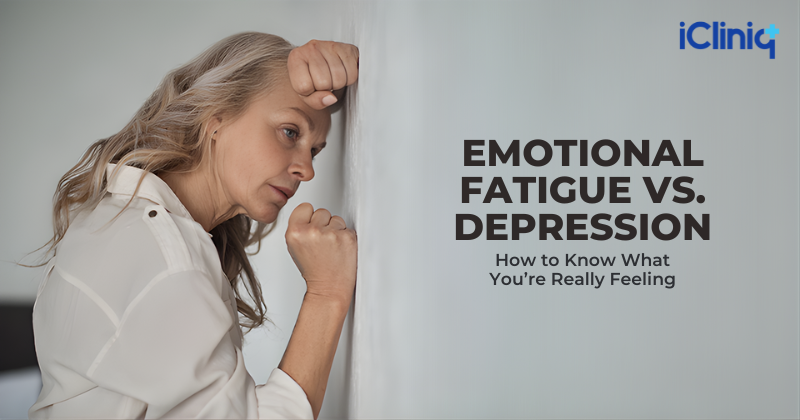
Emotional fatigue and depression can look very similar on the surface. Consequently, many people struggle to name what they are actually feeling. The distinction matters. Although the experiences overlap, they are not the same, and each responds to a different kind of support.
What Emotional Fatigue Really Feels Like
Emotional fatigue tends to develop quietly over time. It usually comes from carrying too much for too long, ongoing responsibilities, constant expectations, or unresolved stress. People often describe feeling empty, easily irritated, or mentally foggy. You may still function day to day, showing up to work, talking to others, and meeting obligations, but everything feels heavier than it once did. A key feature is that emotional fatigue is usually tied to stress, and symptoms often ease when that pressure is reduced.
What Makes Depression Different
Depression goes beyond feeling worn out. It involves a persistent low mood that does not lift easily, even with rest. Many people lose interest in things they once enjoyed, feel disconnected from others, or experience a sense of hopelessness that feels out of proportion to their circumstances. Sleep, appetite, concentration, and self-worth are often affected. Unlike emotional fatigue, depression does not reliably improve when life slows down or situations get better.
Signs That Help Tell Them Apart
With emotional fatigue, there are usually moments when you feel more like yourself after taking time off, getting proper rest, or stepping away from stress. With depression, those moments are uncommon or absent. Emotional fatigue feels like depletion; depression feels more like loss. Paying attention to how long symptoms last and what helps (or doesn’t) can provide important insight.
Why Labeling It Correctly Matters
Many people dismiss depression as “just stress” and delay seeking help. Others worry they are depressed when they are actually exhausted and emotionally overextended. Both situations can prolong suffering. Emotional fatigue often improves with rest, boundaries, and support. Depression usually requires professional care. Treating everything as burnout can delay recovery when deeper help is needed.
What You Can Do Next
If you feel emotionally drained, start by allowing yourself to slow down. Reduce what you can, rest without guilt, and talk honestly about how you are feeling. If sadness, numbness, or hopelessness lasts longer than a couple of weeks or begins to interfere with daily life, reaching out to a mental health professional is important. Seeking help is not a sign of weakness; it is a step toward clarity and relief.
Understanding what you are experiencing is not about labeling yourself. It is about responding with the right kind of care. Emotional pain deserves attention, whether it stems from exhaustion or illness. Listening early often makes recovery gentler and more effective.
Publisher: Source link