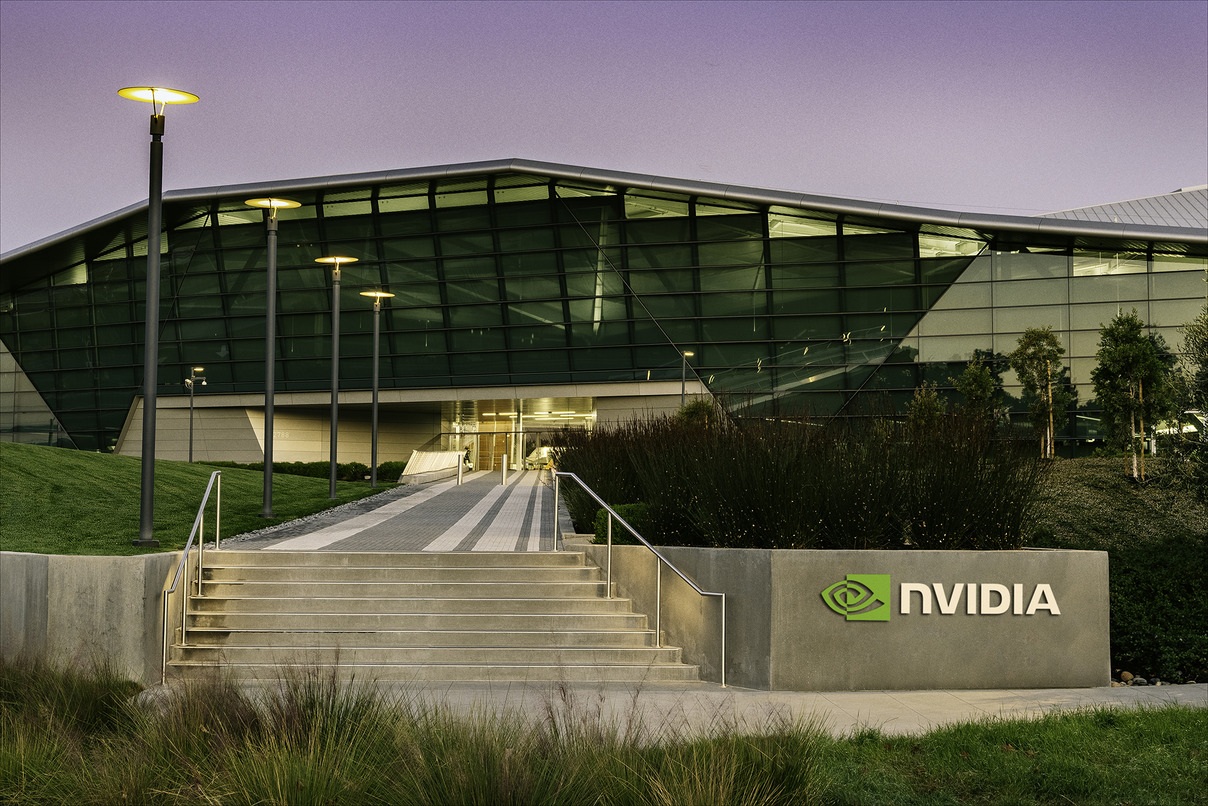
Chip giant Nvidia is working with startup Abridge to train a healthcare-specific foundation model tailored to clinical conversations.
The AI model is designed to improve the accuracy, reliability, auditability and customization of clinical workflows, from documentation and evidence grounding to workflow automation and clinical reasoning support, the companies announced Thursday.
Building on the Nvidia Nemotron open model family, where both the model weights and training data are available, the new Abridge model will be trained on Nvidia Blackwell AI infrastructure, using advanced pre-, mid-, and post-training processes with de-identified data, the companies said.
Abridge executives noted that training across all three stages will enable clinical knowledge to be embedded from the ground up, improving accuracy, precision and reliability across specialties, care settings and the multi-step workflows that follow the clinical conversation. By domain adapting earlier in the training lifecycle, Abridge can build a model that reasons clinically from its foundation. Nvidia’s Nemotron gives Abridge the ability to optimize for quality, cost, and efficiency at every layer, deploying the right model for the right workflow, at the right scale, executives said.
Nvidia also is an investor in Abridge through its NVentures venture capital arm.
Abridge is quickly building out its AI platform beyond just an AI scribe tool to function as a full-scale AI clinical assistant. This week, the company announced a major platform expansion to integrate payer and life sciences workflows. Described as an “AI-native clinician intelligence platform,” Abridge says it now connects care delivery, payment and evidence-based treatment.
The company now works with 300 health systems and its technology supports more than 100 million conversations annually. As Abridge builds out its AI platform, the company wants to improve the performance and speed of its models.
“You want to sprinkle intelligence everywhere, and how do you figure out how to do that? How do you figure out also how to deliver the right level of accuracy, the right level of latency? You end up needing a little bit more control in spots than you might have anticipated, and we’ve been incredibly privileged to partner together and to build on top of the Nemotron model family,” Abridge CEO and co-founder Shiv Rao, M.D., said during a keynote event in New York City on Thursday, speaking on stage with Kimberly Powell, vice president, healthcare at Nvidia.
Rao added, “Since we have a very maximalist sort of attitude around sprinkling intelligence everywhere we possibly can, it means we do have to reach down lower into the stack and control our destiny. Latency is a big issue for us because we do want the clinician to be able to stop, swivel the chair, and have all of those artifacts there.”
Health tech companies see big opportunities to tap into Nvidia’s computing power to advance their AI capabilities. Last fall, Verily, part of Alphabet and Google’s life sciences sister company, announced a collaboration with Nvidia to integrate its AI technology stack into Verily’s Pre platform. Innovaccer also announced that it adopted Nvidia’s full-stack AI platform to accelerate speech, text and multimodal reasoning infrastructure to power its AI agents.
The computer chip giant also is pushing deeper into life sciences. Eli Lilly and Roche have formed AI infrastructure collaborations with Nvidia, Fierce Biotech reported. On the medtech side, the company is working with Thermo Fisher Scientific to build out its autonomous laboratory infrastructure and Qiagen, a Netherlands-based diagnostics maker, to boost the ability of researchers to leverage AI in the drug discovery process, as Fierce Medtech reported. The company also is diving deeper into the medtech and cancer research arenas through a tie-up with diagnostics maker Droplet Biosciences.
Nvidia is bullish that healthcare “will be one of the largest technology industries,” Powell said Thursday.
“Nvidia is not a healthcare company, we will never be, we never intend to be, but in order for us to tackle some of the hardest work in the world, work that has huge impact, and we have convinced ourselves we do have a unique ability to contribute,” she said.
“We’re in this phase of AI where it’s moving so fast, so how do we make it our mission statement in healthcare practice to make technology that moves so fast accessible to the healthcare industry?” she said.
In the past 18 months, the tech industry has evolved through “three huge technological breakthroughs” from “AI that can generate things to AI that can reason through things to AI that can do work,” Powell noted.
There is a need for AI intelligence that is more domain-specific and built for complex workflows in healthcare, she noted, as generic AI models “don’t understand the clinical language, doesn’t have the clinical reasoning, and it surely doesn’t have the domain expertise of all of the long-running tasks and interconnected work that has to happen for workflows to be completely transformed,” she noted.
“Every technological breakthrough requires you to look at the full stack. We think of AI as not a model, it’s a full-stop computing problem. It starts with energy, it’s then chips and systems, it’s then AI data centers and clouds, then it’s core foundation models, and finally it’s the application layer, which [Abridge] squarely has put it forward that vertical AI application layer has incredible value and effectiveness,” Powell said Thursday. “What we’re recognizing together is it’s time to go deeper in the stack—a clinical conversation foundation model, so that the complexity of healthcare and all of the workflows and the connectivity of this amazing ecosystem that you’ve brought to bear can be realized, because it has to become much more domain specific.”
Publisher: Source link