Less than two days away from deadline, tens of thousands of University of California workers show little interest in calling off their system-wide strike.
About 42,000 university workers represented by AFSCME Local 3299, including 25,000 who are employed at a UC Health care facility or other healthcare role, are set to walk off the job at midnight, May 14.
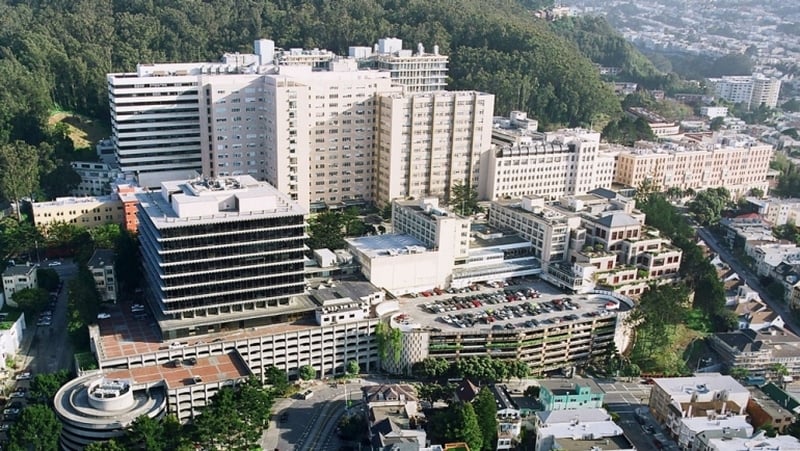
A Monday notice from the union affirmed that it is planning daily public pickets at all of the public institutions’ campuses and medical centers. It said the workers’ “largest actions” would be held at several major hospitals like UC San Francisco Medical Center, UC Davis Medical Center and UC Los Angeles, Ronald Reagan Medical.
The demonstration would be a first for the university and its academic health system as well as the state of California. Leadership across the institution and its health facilities warned in recent days that it would bring “noticeable impacts” on services, including healthcare delivery.
The workers and the university have been at odds over a labor contract and allegations from the union that the university has refused to bargain in good faith on issues like housing aid and healthcare coverage rates. The union’s members, a combination of patient care roles like medical assistants and MRI technicians, as well as service workers like custodians and food service teams, have been working without a contract since 2024.
The university, in a Monday update, said it had presented the union with an updated proposed offer that brought the sides “closer than ever to reaching a contract agreement” ahead of the strike. The statement added that tentative agreements are in place for “roughly three-quarters of the contract’s major articles” and that “only a limited number of contract articles remain unresolved, with the remaining discussions primarily focused on wages, benefits and a smaller number of workplace matters.”
AFSCME Local 3299’s Monday message was less conciliatory, telling the public that the university has “refused to bargain” on its priorities, leaving “no choice but to strike.”
“Our team continues to bargain in good faith, but thus far talks have fallen short on core economic issues, including housing and healthcare costs that would leave many members worse off and unable to afford the same quality of care they deliver every day,” Michael Avant, AFSCME Local 3299’s president, said in the release. “Though bargaining is scheduled over the next two days, if UC fails to rectify the terms it illegally imposed and refuses to address the core issues driving the affordability crisis for its most vulnerable employees, our members will be on strike on Thursday morning.”
The union announced its intent to launch an open-ended unfair labor practices strike a month ahead of the May 14 deadline, which it said would give the university enough time to implement staffing contingencies at its facilities. AFSCME Local 3299’s messaging this week also reiterated plans to exempt a subset of critical care workers from the strike and “create a patient protection task force—a line of communication with UC hospitals—that will enable certain striking workers to support emergencies during the work stoppage if UC’s contingency plans are insufficient to meet patient needs.”
The university’s most recent update described an offer that would give “most” employees as much as 34% total pay growth over the contract’s life. The proposal, per UC, includes revised pay scales and guaranteed step increases for those earning under $25 per hour, up to $3,000 of annual medical plan premium savings and an up to $2,000 bonus upon contract ratification.
“We are disappointed that the latest proposal package was not accepted,” Associate Vice President for Systemwide Labor and Employee Relations Missy Matella said in the update. “We know employees are looking for certainty, stability and meaningful economic support, and UC remains committed to reaching an agreement that puts additional money in employees’ pockets and provides long-term support to address affordability.”
Individual schools and health systems within the sprawling University of California system have also issued warnings ahead of the planned walkout.
The heads of UCSF and UCSF Health, on May 8, said that teams across their organizations “are implementing plans to sustain essential services and maintain continuity across clinical care, research, and education.”
UC Health cares for 2.5 million patients annually. It is comprised of the University of California’s six academic medical centers— the UC Davis Medical Center, the UC Irvine Medical Center, the UCLA Medical Center, the UC San Diego Medical Center, the UCSF Medical Center and the non-acute UCR Health—their associated hospitals and care sites, and a network of 21 health professional schools. It comprises more than 5,000 licensed beds. A financial filing (PDF) for its combined medical centers outlines total operating revenue of nearly $25.9 billion and operating income of over $1.9 billion for the 2024-2025 fiscal year.
The broader university’s 2024-2025 financial statement outlined $51.9 billion of total primary revenue and a $5.9 billion operating loss, though other net nonoperating revenues and other sources placed the organization at a $5.7 billion change in net position.
Last summer, UC San Diego Health laid off about 1.5% of its 14,000-person workforce. The organization attributed the move to financial pressures and regulatory uncertainty, though the justification was panned by AFSCME Local 3299 and other unions with affected members.
More recently, UCI Health announced a strategic restructuring that would trim its workforce by 1%, or about 150 people. Federal funding shifts, insurance reimbursement changes and patients’ shift to outpatient care were cited as factors in the changes.
Publisher: Source link