
After years of conversation, legislators pushed key reforms to pharmacy benefit managers over the finish line, much to the chagrin of the industry.
Under the bipartisan health funding deal, which was signed into law by President Donald Trump on Tuesday, PBMs will be required to pass through all drug rebates, fees and other funds to the payer, and, if they fail to comply, the Centers for Medicare & Medicaid Services (CMS) can impose fines.
In addition, in Medicare Part D, PBM fees must be “delinked” from the list price of drugs. The CMS will also establish reasonable contract terms in Part D around transparency.
Lawmakers have debated PBM reform for years as what consumers pay at the pharmacy counter continues to rise, but, despite the bipartisan support, previous efforts have fallen short. The Pharmaceutical Care Management Association (PCMA), the largest lobbying organization representing PBMs, has characterized the scrutiny as a gift to pharmaceutical manufacturers.
Brendan Buck, chief communications officer at the PCMA, said in a memo that the bill’s passage makes for a “remarkable moment.”
“Not for the impact on drug prices (higher),” he said. “But rather because it is the culmination of a years-long effort by drugmakers to convince Congress that PBMs are the problem with high drug costs.”
“The pharmaceutical industry deserves serious credit for this campaign, which managed to persuade people that discounts are in fact bad, and PBM transparency, somehow, is the roadblock to falling drug prices,” Buck continued.
The PCMA notes that the Pharmaceutical Research and Manufacturers of America (PhRMA), the main lobbying group for drugmakers, spent record-high lobbying dollars in 2025. Per a report in The Washington Post, PhRMA’s lobbying spend hit $37.9 million, up 22% from 2024.
Stephen J. Ubl, president and CEO of PhRMA, said in a statement when the reforms passed that the measures marked a key step to “generate savings for the healthcare system and lower costs for patients.”
“For too long, PBMs have profited from medicines with little transparency or accountability. That starts to change today,” Ubl said. “As PBMs continue to evolve their business model, policymakers should explore additional reforms to address the harmful consequences of growing consolidation among PBMs and insurers who are increasingly denying care to patients.”
Buck said that now that Congress has enacted PBM reform, “this boogeyman has been exorcised,” and policymakers should now turn to pharma as they mull future reforms. The PCMA recommended some areas for legislators to start, including pay-for-delay deals, direct-to-consumer advertising and patent abuses.
Pharmaceutical manufacturers weren’t the only stakeholders cheering greater regulation for PBMs. Employers, which face enhanced fiduciary duties under the Consolidated Appropriations Act of 2021 (CAA), have also called for more oversight of the industry, especially as they’re often kept in the dark about what their charges look like.
Elizabeth Mitchell, CEO of the Purchaser Business Group on Health, told Fierce Healthcare that the CAA changes made it so that an employer’s benefits team is essentially held accountable for having expert-level knowledge on their benefit offerings.
“My members, at least, welcome that accountability, but they have to have the tools to be successful,” she said. “They can’t do this without information.”
A lack of information also prevents them from getting a full picture of what their costs may look like, and if they’re getting the best possible deal, she said. But, Mitchell said reforming PBMs is just a part of the puzzle, as employers lack key data from health plans and providers, too.
These longstanding challenges are opening the door for interest in alternative PBMs and health plans, which are built on transparency, Mitchell said. But increased price transparency also makes it simpler for employers to compare between even the Big Three PBMs.
“I think it’s going to accelerate that market and introduce competition where there hasn’t been any,” Mitchell said.
The ERISA Industry Committee (ERIC), which represents large employers that offer benefits to their workforces, echoed the sentiment in a statement, saying that the PBM reforms are a critical victory for plan sponsors and people who are covered through their employers.
James Gelfand, president and CEO of ERIC, said the organization has spent years pushing for greater transparency and other major reforms.
“For years, ERIC has carried the proverbial PBM policy football down the field. Some years, we gained yards,” Gelfand said. “Other years, it was more like Lucy with the football in that old Charlie Brown cartoon. ERIC would get the ball down the field and be ready to kick it through the goal post for the win, only to have it yanked away at the last second.”
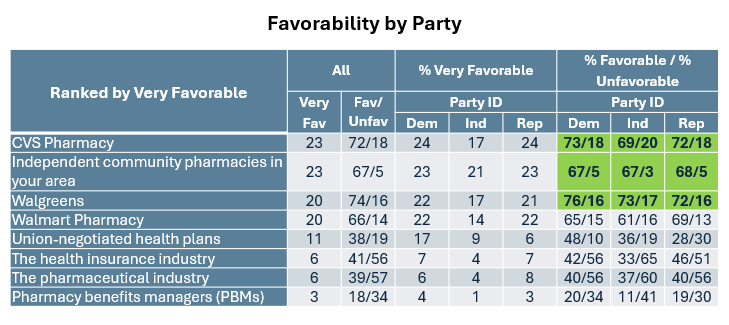
Pharmacists also celebrated the passage of PBM reforms, with independent pharmacies a leading voice in the call for changes in this space. B. Douglas Hoey, CEO of the National Community Pharmacists Association, said the group’s members have spent years sounding the alarm that PBM actions are making it hard for independent pharmacies to stay afloat.
Hoey said that while the length of the debate has allowed for the closure of a number of independent pharmacies, the shift is better late than never.
“We’re grateful to our champions in Congress and to the president for seeing these provisions across the finish line in the face of tremendous pressure by PBM-insurers to maintain the status quo,” Hoey said. “The pharmacy payment model is changing, and we’ll keep fighting to secure the best possible outcomes for independent community and long-term care pharmacies and their patients.”
Publisher: Source link