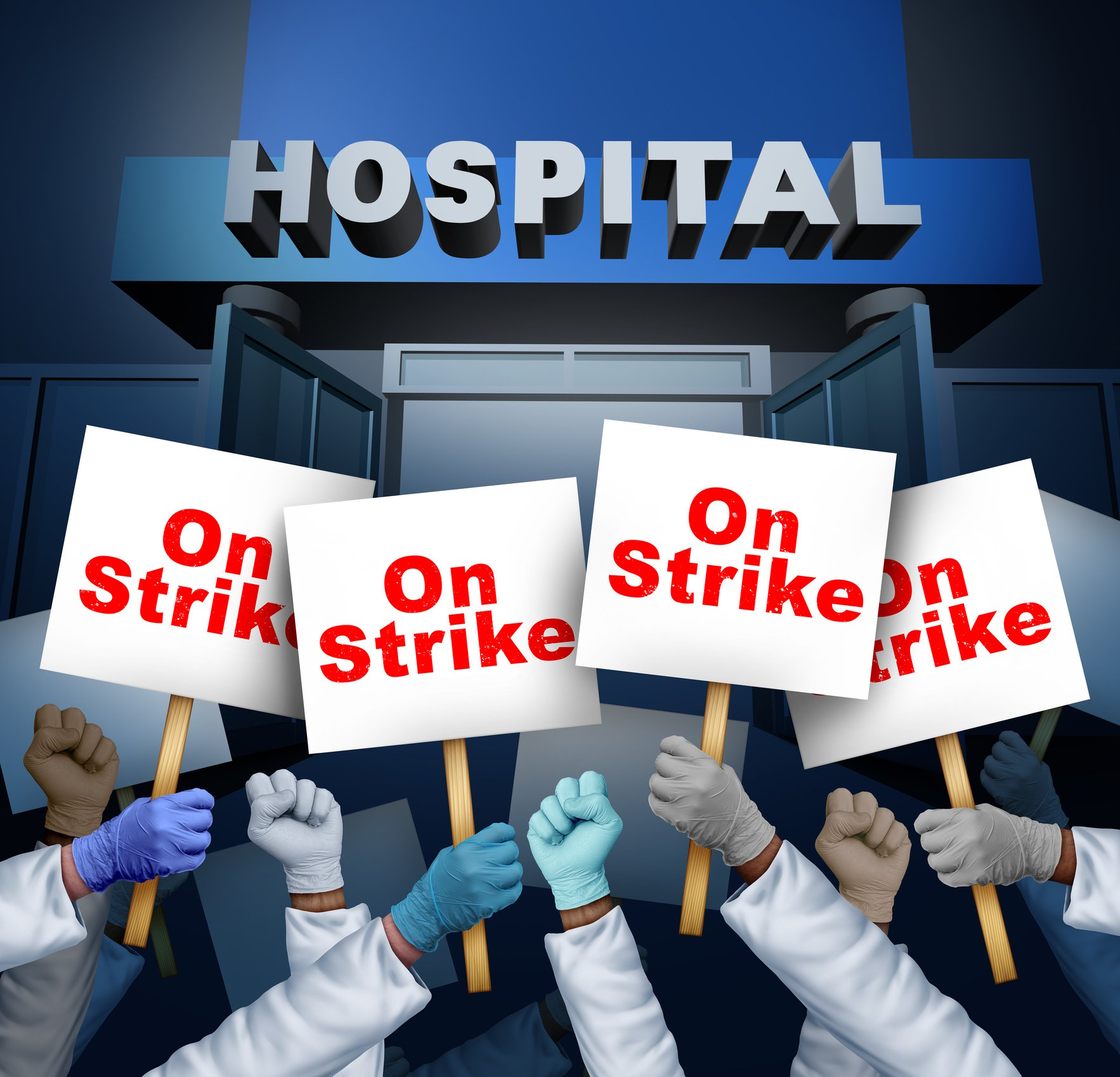
Kaiser Permanente is staring down the barrel of a 31,000-worker strike across more than two dozen hospitals and clinics.
The United Nurses Associations of California/Union of Health Care Professionals (UNAC/UHCP), which represents the workers, said it delivered a 10-day strike notice on Thursday to the integrated nonprofit’s management, setting the stage for a Jan. 26 walkoff in California and Hawaii.
The workers have been without a contract since the end of September. UNAC/UHCP members and others in the broader Alliance of Health Care Unions—a coalition of 23 local unions—launched a five-day strike shortly after to pressure the system and raise public awareness around its primary argument for increased staffing levels.
The impending open-ended strike similarly highlights the workers’ demands for increased staffing, increased wages and pension benefits for those who do not have them. Addressing these, they said, would increase patient safety, ensure prompt delivery of care, prevent burnout and improve workers’ economic stability.
“We’re not going on strike to make noise,” Charmaine Morales, president of UNAC/UHCP, said in a release. “We’re authorizing a strike to win staffing that protects patients, win workload standards that stop moral injury, and win the respect and dignity Kaiser has denied for far too long.”
Workers represented in the union include nurses, pharmacists, physician assistants, dietitians and other types of specialty care professionals. Most work in California.
Negotiations froze in December
In addition to the contract demands, the union said its members decided to support a strike in order to secure “respect at the bargaining table.” In statements and messages to members, the union has said Kaiser often delayed responding to bargaining proposals for weeks and months.
Months of talks between the parties over a new contract broke down further when Kaiser made a “difficult decision” to pause bargaining in mid-December.
In a statement and video, Chief Human Resources Officer Greg Holmes said that a union leader—subsequently identified as UNAC/UHCP Executive Director Joe Guzynski—had suggested in a meeting that he had evidence of “illegal, unethical and reputationally damaging” conduct that could remain under wraps if the parties reached an acceptable deal. Kaiser requested the evidence so that it could investigate and correct any wrongdoing; however, the threat “undermined both parties’ ability to continue good faith bargaining,” Holmes said.
UNAC/UHCP has said that the accusations against Guzynski are false and that the system is “using a bargaining-related conversation as an excuse” to walk away from discussions. Shortly after Kaiser’s decision, the union filed an unfair labor practice charge with the National Labor Relations Board, alleging that the accusation and pause is an attempt “to bypass the agreed-upon national bargaining process and interfere with good-faith negotiations that have been underway since May 2025.”
Kaiser, in a Jan.15 statement, said there has been “no material movement on key economic issues for months” and that since the pause, UNAC/UHCP “has refused to resolve the matter as requested.” The system said it stands by its historic offer of a 21.5% wage increase over the length of the contract and again offered to move forward on the remaining open contract items in negotiations with union locals, as opposed to national bargaining.
“Local bargaining has continued to move forward, even during the pause at the national table, and we have resolved all local issues at 29 of 53 local union tables to date,” the statement reads. “We believe this is momentum we can all build on.”
UNAC/UHCP, also on Jan. 15, released a report titled “Profits Over Patients” that highlights the $7.9 billion of net income reported by Kaiser across its most recent three quarters. The report points to recent spending, operational and governance practices the union said run counter to its nonprofit mission, and includes a section on “Kaiser’s attack on its employees” that focuses on labor negotiation breakdowns and the resulting strike and service disruptions.
“Kaiser can end this whenever they choose by coming back to the table and bargaining in good faith,” Morales said in the strike announcement. “Until they do, we are done waiting. Striking is the lawful power of working people, and we are prepared to use it on behalf of our profession and patients.”
Publisher: Source link